Time to read: 4 min
If you made it through Part I — first of all, respect. You’ve already tackled taxes, Social Security, and pensions in Spain. That’s not beginner level anymore.
But… welcome to Part II — where Spain really tests your patience (and your coffee tolerance ☕).
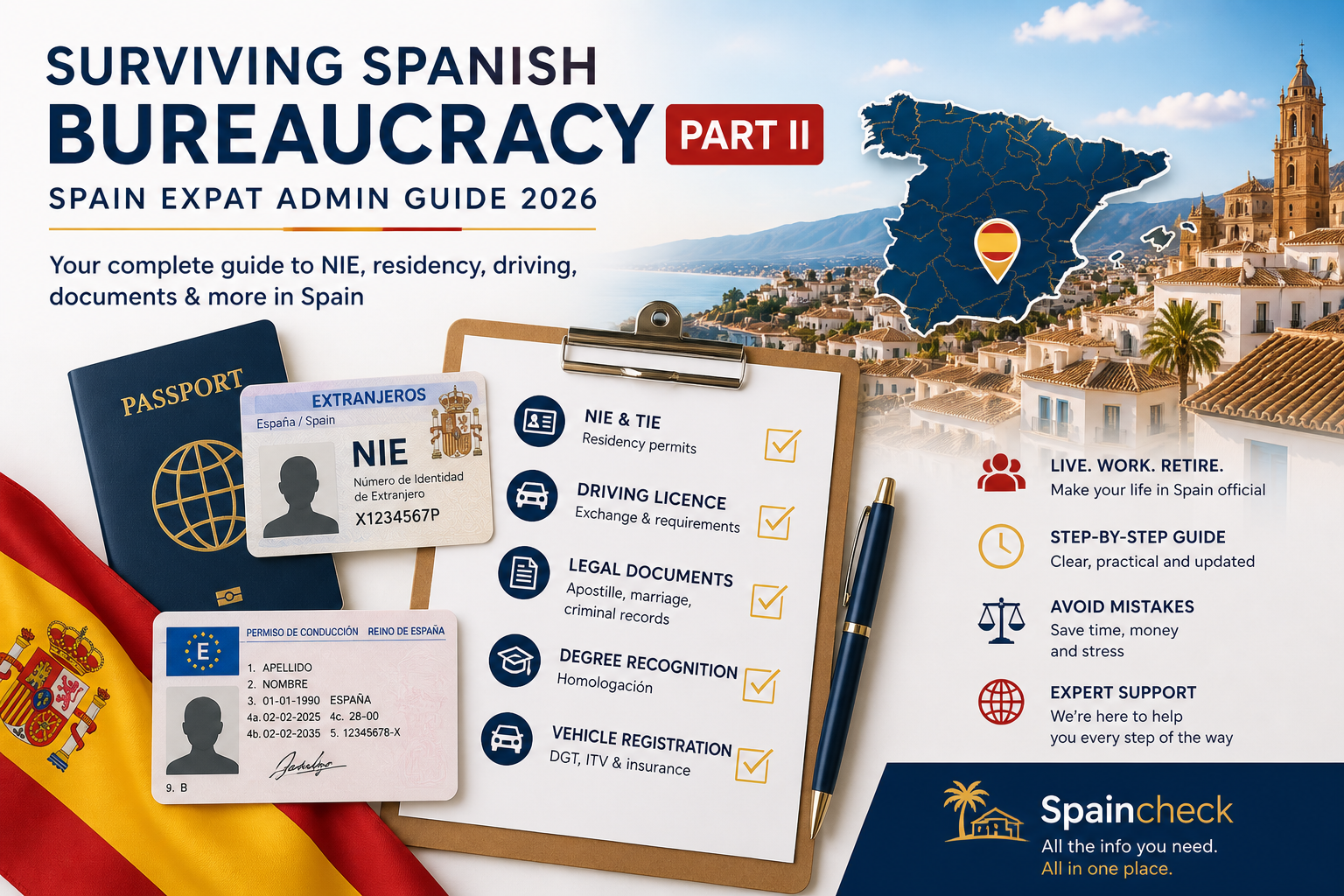
If you’re planning to live, work, retire, or invest in Spain, you’ll still need to deal with:
- Residency permits (NIE / TIE)
- Driving licenses & vehicle registration
- Legal documents & criminal records
- Degree recognition (if you want to work)
This is where your move becomes official — not just a dream with good weather.
We built this guide to make the process simple, clear, and realistic — based on what actually happens on the ground.
🚗 DGT (Dirección General de Tráfico)
What is it?
Spain’s official traffic authority.
What you’ll use it for:
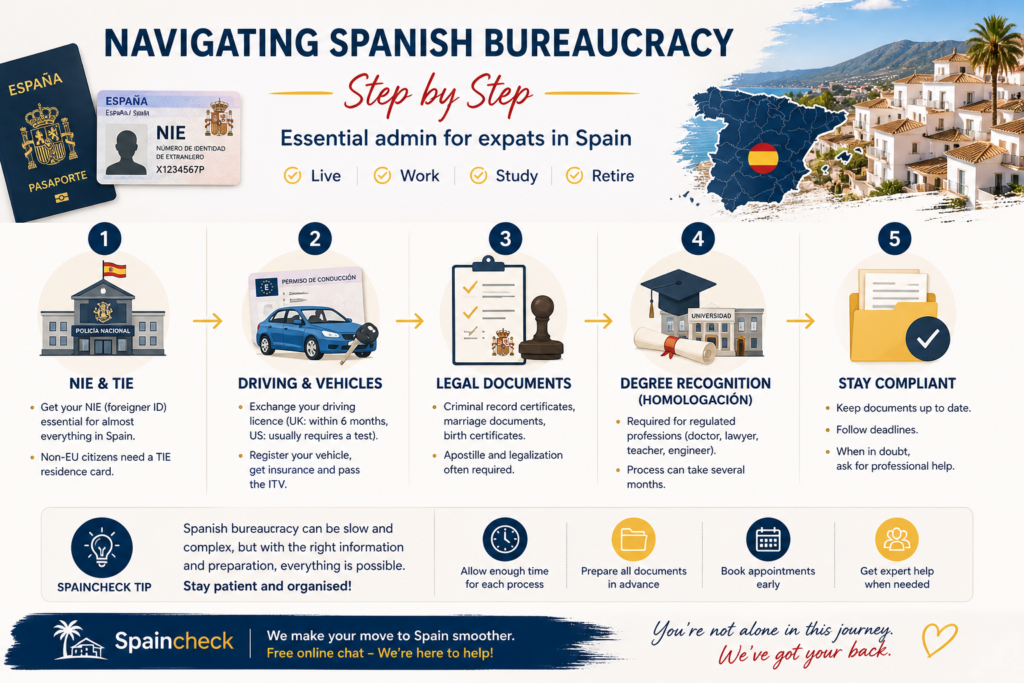
- Driving licence exchange
- Vehicle registration
- Traffic fines (yes… they find you)
What expats should know:
- UK citizens → Must exchange licence within 6 months of residency
- US citizens → Usually need to pass a Spanish driving test
- Bringing a car?
→ You’ll need registration, insurance, and pass the ITV (Spain’s MOT)
👉 Reality: This is often one of the first “welcome to Spain” moments.
🪪 Policía Nacional (NIE & TIE)
What is it?
The authority handling immigration procedures.
Why it matters:
This is where your life in Spain officially begins.
What you’ll need:
- NIE (Número de Identidad de Extranjero)
→ Your tax ID for everything in Spain - TIE (Tarjeta de Identidad de Extranjero)
→ Physical residence card (for non-EU citizens)
What expats should know:
- You need an NIE for:
- Buying property
- Opening a bank account
- Working
- Paying taxes
- Non-EU? → TIE is mandatory
👉 Without NIE, you basically don’t exist in the Spanish system.
⚖️ Ministry of Justice
(Criminal Records, Marriage, Legal Documents)
What is it?
Handles legal documentation and certifications.
What you’ll use it for:
- Criminal record certificate
- Marriage documentation
- Apostille (legalisation of documents)
What expats should know:
- Many processes require legalised documents
- Foreign documents often need:
- Translation
- Apostille
- Embassy validation
Planning to marry in Spain?
You’ll need:
- Birth certificate
- Proof of single status
- Legalised documents
👉 Tip: This is where delays often happen — plan early.
🎓 Ministry of Universities
(Degree Recognition – Homologación)
What is it?
The authority that validates foreign degrees.
When you need it:
- Regulated professions:
- Doctor
- Lawyer
- Teacher
- Engineer
What to expect:
- Processing time: months → 1+ year
- Some professions require:
- Exams
- Additional coursework
Good news:
- Non-regulated jobs (e.g. IT, marketing)
→ Often no homologation required
👉 Reality: This step is slow, but important for long-term careers.
🧠 What Most Expats Don’t Expect
Spain isn’t difficult — it’s procedural.
Things take time because:
- Appointments are limited
- Systems are regional
- Documentation must be exact
👉 The difference between smooth and stressful:
- Preparation
- Correct documents
- Local knowledge
☕ Final Thoughts (and Honest Advice)
You have two options:
Option 1:
Do everything yourself
✔ Saves money
❌ Costs time, energy, and patience
Option 2:
Work with professionals
✔ Faster, smoother, fewer mistakes
✔ Especially useful for property tax & residency
💡 Spaincheck Tip
Stay calm, stay organised, and don’t panic if something takes longer than expected.
Everyone goes through this process.
👉 Need Help?
If you want to avoid delays, mistakes, or endless appointments, you can speak with us directly.
We help expats with:
- NIE & residency guidance
- Tax & relocation planning
- Property & investment advice
Leave a Reply