
Time to read: 4 min
Before you deal with residency cards, driving licences, or paperwork (that’s Part II 👀), there’s something even more important:
👉 Getting your financial and legal foundation right in Spain
This is where many expats make mistakes — not because it’s hard, but because it’s different.
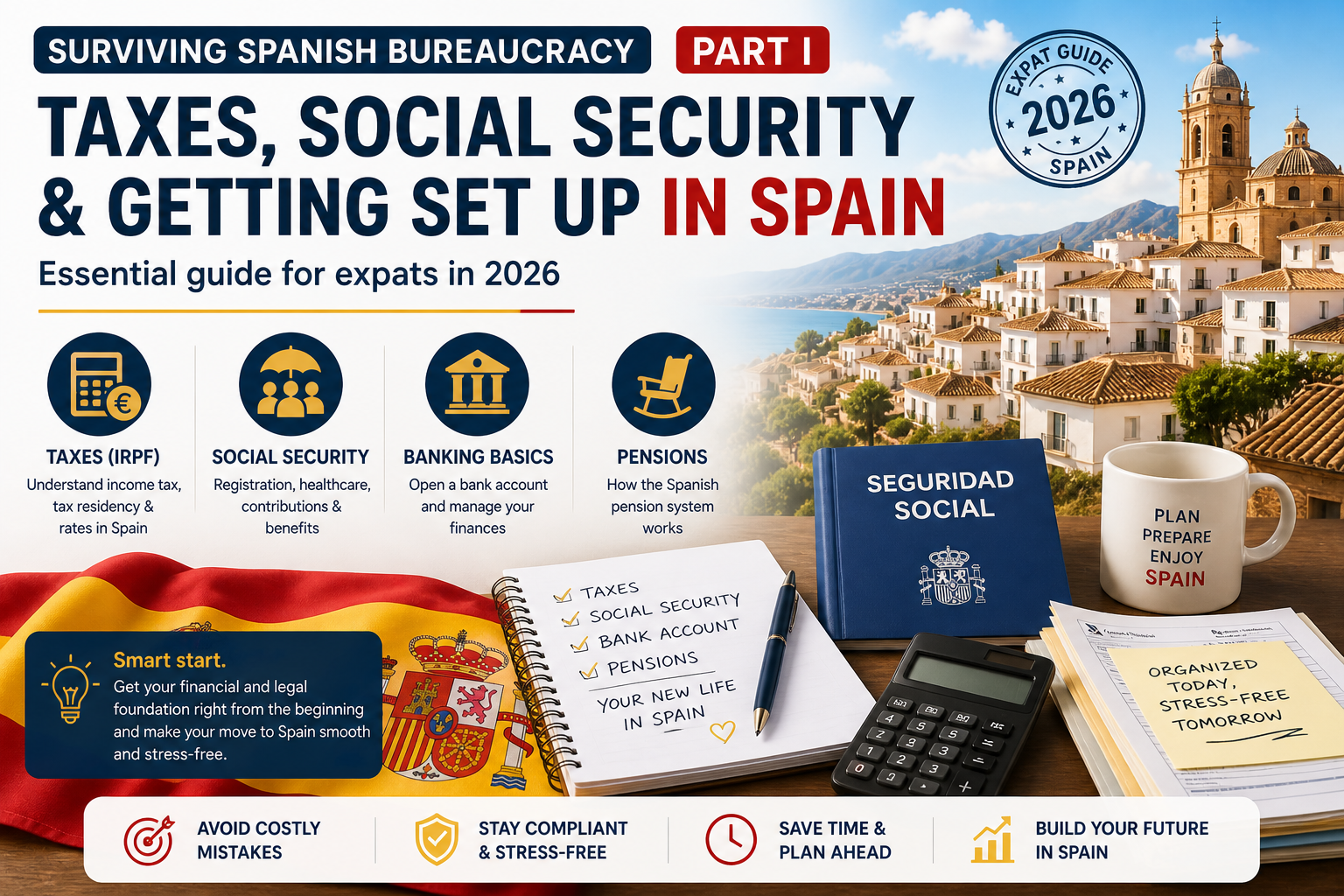
In this guide, we’ll walk you through the first essential systems in Spain:
- Taxes (IRPF & residency rules)
- Social Security registration
- Banking basics
- Pension system overview
Think of this as the “invisible setup” — the things you don’t see, but everything depends on.
💰 Spanish Tax System (IRPF) – The Basics
What is IRPF?
IRPF (Impuesto sobre la Renta de las Personas Físicas) is Spain’s income tax.
What makes Spain different:
- It’s progressive (higher income = higher tax)
- It’s split into state + regional tax
- Your tax rate depends on:
- Income
- Region
- Personal situation
Key rule:
👉 If you live in Spain more than 183 days/year, you are considered a tax resident
That means:
- You declare worldwide income
- Not just income earned in Spain
Typical tax ranges:
- ~19% → lower income
- ~45–47% → higher income
👉 Yes, it’s not the lowest in Europe — but it comes with public services, healthcare, infrastructure.
🧾 Social Security (Seguridad Social)
What is it?
Spain’s system for:
- Healthcare
- Pensions
- Unemployment
- Maternity benefits
When you need it:
- If you work in Spain
- If you are self-employed (autónomo)
What expats should know:
- You need a Social Security number before working
- Contributions are:
- Paid by employer + employee
- Or fully by you if self-employed
👉 Reality:
Without this, you’re not “in the system”
🏦 Opening a Bank Account in Spain
Why it matters:
You’ll need it for:
What you’ll usually need:
- NIE number
- Passport
- Address (sometimes)
Pro tip:
Some banks offer non-resident accounts → useful at the beginning
👉 Expect paperwork. Spain likes paperwork.
🧓 Spanish Pension System (Quick Overview)
How it works:
- Based on years worked + contributions
- Standard retirement age: ~66–67
What expats should know:
- EU agreements allow pension transfers/coordination
- Non-EU → depends on bilateral agreements
👉 Important:
Even if you don’t stay forever, contributions may still count.
⚠️ Common Mistakes Expats Make
- ❌ Assuming tax works like in their home country
- ❌ Not registering properly for Social Security
- ❌ Ignoring tax residency rules
- ❌ Mixing resident vs non-resident taxation
👉 These mistakes don’t show immediately… but they show later.
🧠 How Part I Connects to Part II
Now that your financial base is clear, you’re ready for the next step:
👉 Residency cards, driving licences, legal documents, and admin processes
➡️ Read here:
Surviving Spanish Bureaucracy (Part II): Expat Admin Guide 2026
☕ Final Thoughts
Spain is not difficult — it’s just structured differently.
If you:
- Understand taxes
- Register correctly
- Set up your finances early
👉 Everything else becomes much easier.
💡 Spaincheck Tip
Start with the systems you don’t see:
- Taxes
- Social Security
- Banking
Then move to paperwork.
That’s how you avoid stress later.
👉 Need Help Getting Set Up?
If you want clarity on:
- Tax residency
- Income tax in Spain
- Cost of living
- Financial planning before moving
👉 Use our tools or speak with us:
Leave a Reply