
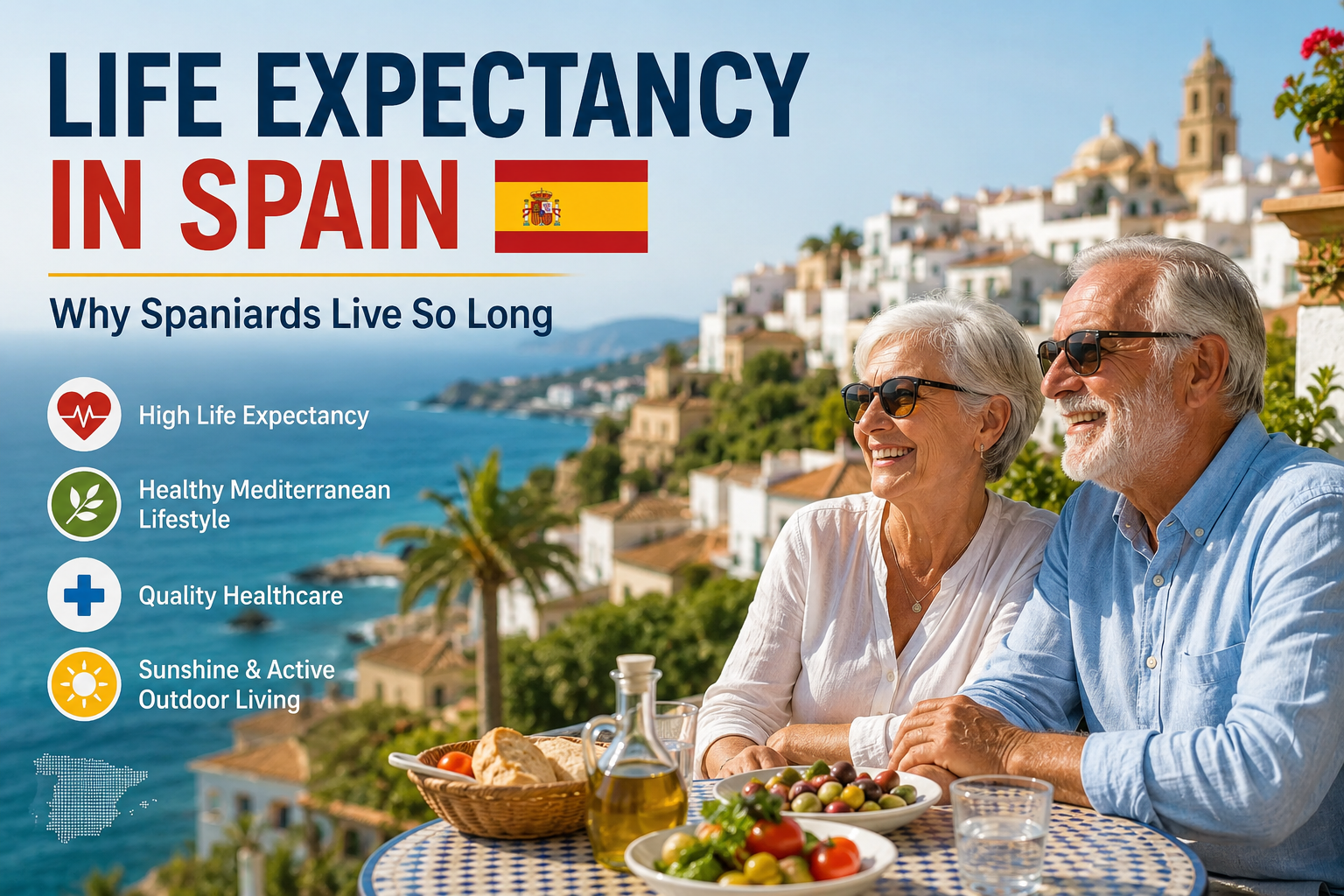
Spain is consistently ranked among the countries with the highest life expectancy in the world. From healthy Mediterranean food and an active outdoor lifestyle to universal healthcare and strong family culture, several factors contribute to Spaniards living longer than most Europeans and Americans.
According to recent international data, the average life expectancy in Spain is around 83 years, placing the country among the global leaders for longevity. Women in Spain live longer on average than men, and many regions of the country are becoming increasingly attractive for retirees seeking a healthier and more relaxed lifestyle.
For many expats and retirees moving to Spain, this is not just a statistic — it reflects the overall quality of life found across the country.
What Is the Average Life Expectancy in Spain?
The average life expectancy in Spain is approximately:
- Women: 85–86 years
- Men: 80–81 years
- Overall average: around 83 years
Spain performs significantly above the global average and remains one of the healthiest countries in Europe.
Based on historical data from Spain’s Ministry of Health and international organizations, life expectancy has steadily increased during the last decades despite temporary declines during the COVID-19 pandemic.
Life Expectancy in Spain Over the Years
Spain has seen a long-term upward trend in longevity due to:
- Better healthcare access
- Improved nutrition
- Lower smoking rates compared to previous decades
- More active lifestyles
- Preventive medicine
- Higher awareness of healthy ageing
During 2020, life expectancy temporarily declined because of COVID-19, particularly among elderly populations. However, by 2022 and 2023, the numbers largely recovered and returned close to previous records.
Average Life Expectancy Trend in Spain
| Year | Female | Male |
|---|---|---|
| 2007 | 84.3 | 77.8 |
| 2010 | 85.2 | 79.1 |
| 2015 | 86.0 | 80.1 |
| 2019 | 86.6 | 80.9 |
| 2020 | 85.0 | 79.5 |
| 2022 | 85.8 | 80.3 |
The overall trend remains strongly positive.
Why Is Life Expectancy in Spain So High?
Several lifestyle and environmental factors help explain why people in Spain tend to live longer.
1. Mediterranean Diet
Spain is famous for the Mediterranean diet, considered one of the healthiest eating patterns in the world.
Typical Spanish meals include:
- Olive oil
- Fresh vegetables
- Fish and seafood
- Legumes
- Nuts
- Fruit
- Moderate wine consumption
This diet is associated with:
- Lower cardiovascular disease risk
- Reduced inflammation
- Better brain health
- Lower obesity rates
- Improved ageing outcomes
Traditional eating habits and smaller processed food consumption compared to some Western countries also play a role.
2. Climate and Outdoor Lifestyle
Many areas in Spain enjoy more than 300 sunny days per year, especially along the Costa del Sol and Mediterranean coast.
The climate encourages:
- Daily walking
- Outdoor socializing
- Sports and exercise
- Better vitamin D levels
- Reduced seasonal depression
People in Spain often spend more time outdoors compared to colder northern European countries.
3. Strong Healthcare System
Spain has one of Europe’s best healthcare systems.
The country offers:
- Universal healthcare access
- High-quality hospitals
- Strong preventive care
- Modern medical infrastructure
- High doctor-to-patient ratios
Both public and private healthcare options are widely available, making Spain especially attractive for retirees and international residents.
4. Family and Social Culture
Social connection is strongly linked to longevity.
Spanish culture places significant importance on:
- Family gatherings
- Community interaction
- Social meals
- Multi-generational relationships
- Lower social isolation among elderly populations
Researchers often associate these habits with lower stress levels and better mental health during ageing.
How Does Spain Compare to Other Countries?
Spain regularly ranks among the top countries globally for life expectancy.
Countries With the Highest Life Expectancy
| Country | Average Life Expectancy |
|---|---|
| Japan | 84–85 years |
| Switzerland | 84 years |
| Singapore | 84 years |
| Spain | 83+ years |
| Italy | 83 years |
| France | 82–83 years |
| Germany | 81 years |
| United States | 77–78 years |
Spain often outperforms larger economies despite lower healthcare spending per capita than some countries.
Which Regions in Spain Have the Highest Life Expectancy?
Some Spanish regions perform better than others due to income levels, healthcare quality, climate, and lifestyle patterns.
Regions often associated with higher longevity include:
- Madrid
- Navarra
- La Rioja
- Basque Country
Coastal Mediterranean regions also tend to perform well thanks to climate and diet advantages.
Main Causes of Death in Spain
Like most developed countries, Spain’s leading causes of death are linked to ageing and chronic diseases.
Most Common Causes of Death
- Ischaemic heart disease
- Alzheimer’s disease and dementia
- Stroke
- Lung cancer
- Chronic respiratory diseases
- Diabetes
- Kidney disease
Despite these conditions, Spain maintains low mortality rates compared to many countries thanks to early detection and strong healthcare access.
Is Spain a Good Country for Retirement?
For many retirees and expats, Spain offers an attractive combination of:
- Long life expectancy
- Warm climate
- Healthy food
- Affordable healthcare
- Relaxed lifestyle
- International communities
- Lower stress environment
Areas such as Marbella, Benalmádena, Estepona, and Alicante are especially popular among foreign retirees seeking a healthier lifestyle.
Final Thoughts
Spain’s high life expectancy is not the result of a single factor. It comes from a combination of healthy eating habits, strong social culture, excellent healthcare, favorable weather, and a more balanced lifestyle.
While modern health challenges still exist, Spain continues to rank among the healthiest and longest-living countries in the world — one of the many reasons why millions of international residents choose to live or retire here every year.
Sources
- World Health Organization (WHO)
- Spanish Ministry of Health
- OECD Health Statistics
- United Nations Population Data
- World Bank Data
Leave a Reply