
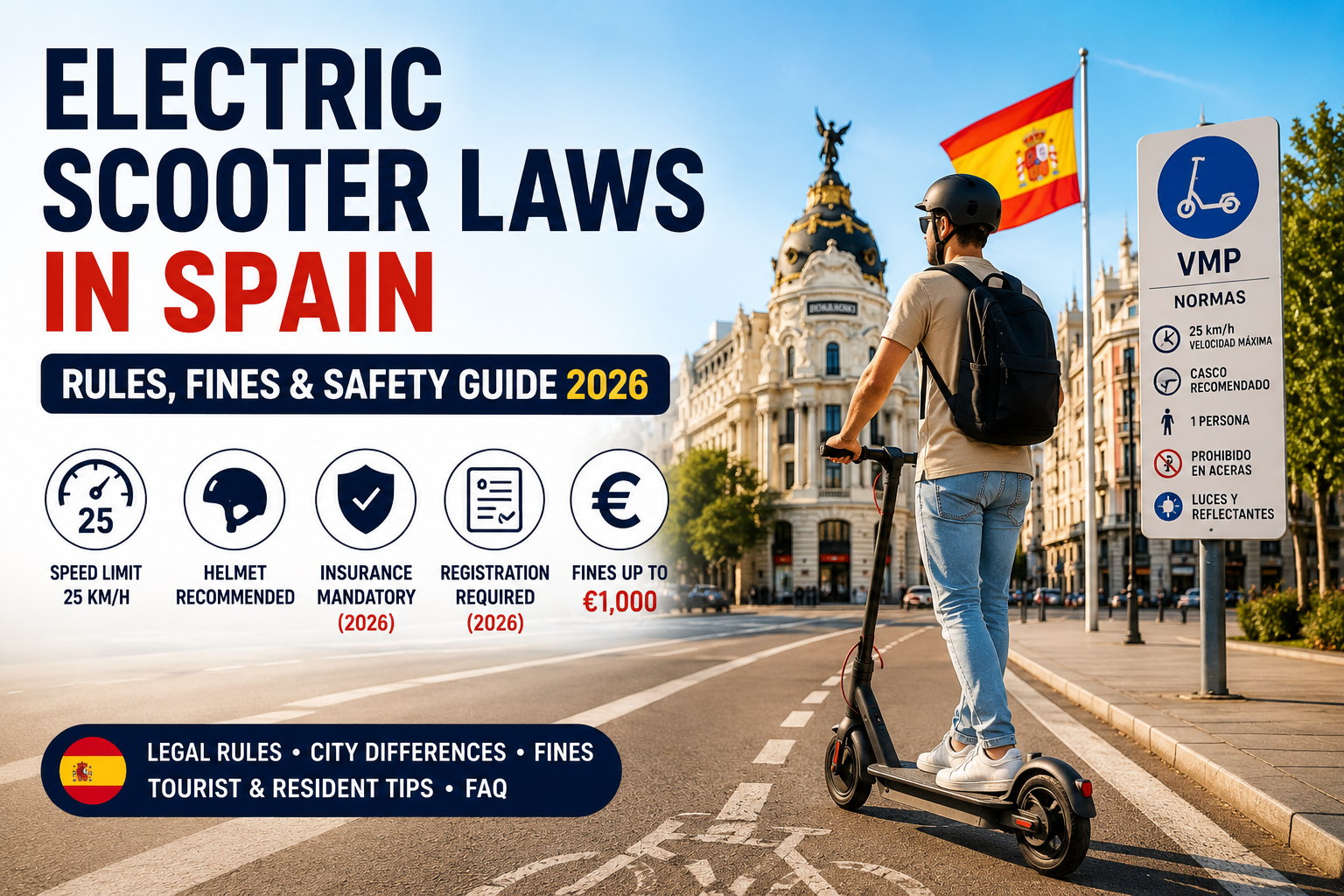
Yes — electric scooters are legal in Spain, but the rules became stricter in 2025 and 2026.
Electric scooters are classified as Vehículos de Movilidad Personal (VMP) by the Spanish traffic authority, the DGT (Dirección General de Tráfico).
New rules now affect:
- Insurance
- Registration
- Helmets
- Certification
- Age limits
- Reflective clothing
- City-specific fines
If you live in Spain or plan to visit, it is important to understand the latest regulations before riding an electric scooter.
Major 2026 Changes to Electric Scooter Laws in Spain
Several important changes are now being introduced across Spain.
1. Mandatory Insurance (2026)
One of the biggest upcoming changes is:
Civil liability insurance is becoming mandatory for electric scooters.
Several 2025–2026 legal updates confirm Spain is moving toward compulsory insurance for VMPs used on public roads.
Potential fines for riding without insurance may reach:
- Up to €1,000
- Vehicle seizure in some cases
The insurance is intended to cover:
- Damage to pedestrians
- Property damage
- Accidents involving third parties
2. DGT Registration Requirement
Spain is also introducing:
- Mandatory scooter registration
- National VMP registry
- Identification plate or QR system
The DGT is gradually implementing the system during 2026.
3. Certified Scooters Only After January 2027
This rule is already confirmed:
- Scooters sold after 22 January 2024 must already have DGT certification.
- Older scooters can still circulate temporarily.
- From 22 January 2027, only certified scooters will be legal on public roads.
What Is a Legal Electric Scooter in Spain?
Under DGT rules, a legal scooter must:
- Have a maximum speed of 25 km/h
- Be designed for one person only
- Use only electric propulsion
- Include lights and reflectors
- Have an audible bell
- Meet DGT technical certification standards
Scooters capable of higher speeds may fall into different legal categories.
Where Can You Ride an Electric Scooter in Spain?
Generally allowed:
- Urban streets
- Bike lanes
- Certain 30 km/h roads
- Designated cycling paths
Generally prohibited:
- Pavements
- Pedestrian zones
- Highways
- Interurban roads
- Urban tunnels
City councils may apply stricter local rules.
Helmet Rules in Spain (2026)
Helmet regulations are becoming stricter across Spain.
Some cities already require helmets by law, while national rules are tightening.
In practice:
- Helmets are highly recommended everywhere
- Many municipalities now require them
- Riders under 16 are usually required to wear one
- Some cities fine adults without helmets
Typical helmet fine:
- Around €200
Reflective Vests & Night Riding
Several Spanish cities now require:
- Reflective clothing at night
- Front and rear lights
- Reflectors
Failure to comply may result in fines.
Speed Limits for Electric Scooters in Spain
Maximum legal speed:
- 25 km/h
Some municipalities impose lower limits in busy areas.
Scooters modified to exceed the speed limit may become illegal.
Minimum Age Requirements
Rules vary depending on the municipality.
However, many cities now set:
- Minimum age of 15 or 16
Examples:
- Málaga → minimum age 16
- Cádiz → under-15s prohibited
Common Electric Scooter Fines in Spain
Typical Fines
| Violation | Fine |
|---|---|
| Riding on pavements | €200 |
| Using headphones | €200 |
| Using mobile phone while riding | €200 |
| Riding without lights at night | €200 |
| Riding under influence of alcohol | €500–€1,000 |
| Riding without insurance (2026 changes) | Up to €1,000 |
| Exceeding 25 km/h | Around €200 |
Drinking Alcohol While Riding a Scooter
No — you cannot legally ride an electric scooter under the influence of alcohol or drugs.
Police can perform alcohol and drug tests on scooter riders just like car drivers.
Fines can range between:
- €500
- €1,000
Can Tourists Rent Electric Scooters in Spain?
Yes.
Tourists can legally rent scooters in many cities including:
- Madrid
- Barcelona
- Málaga
- Valencia
- Seville
However, tourists are still fully subject to Spanish traffic laws and local city regulations.
Important City Differences in Spain
Local municipalities can impose stricter regulations.
Example: Málaga
Málaga introduced tougher rules including:
- Helmet requirements
- Minimum age 16
- Fines up to €500
Example: Seville
Seville increased fines and introduced stricter visibility rules in late 2025.
FAQ About Electric Scooters in Spain
Starting in 2026, Spain is moving toward mandatory civil liability insurance for electric scooters used on public roads.
In many cities, yes. Helmet rules are becoming stricter nationwide.
No. Electric scooters are generally prohibited on pavements and pedestrian areas.
No. Only one rider is allowed per scooter.
Usually not as standard VMP scooters. They may fall under different vehicle categories.
Final Thoughts
Electric scooters remain one of the easiest ways to move around Spanish cities, especially in places like:
- Málaga
- Barcelona
- Valencia
- Madrid
However, Spain’s laws are becoming significantly stricter.
By 2026–2027, riders should expect:
- Mandatory insurance
- Registration systems
- Helmet enforcement
- Certification requirements
- Higher fines
Understanding the rules now can help you avoid expensive penalties and enjoy safer riding in Spain.
Read More About Everyday Rules in Spain
If you are relocating to Spain, you may also want to understand:
You can explore more practical Spain legal guides before moving.
Leave a Reply