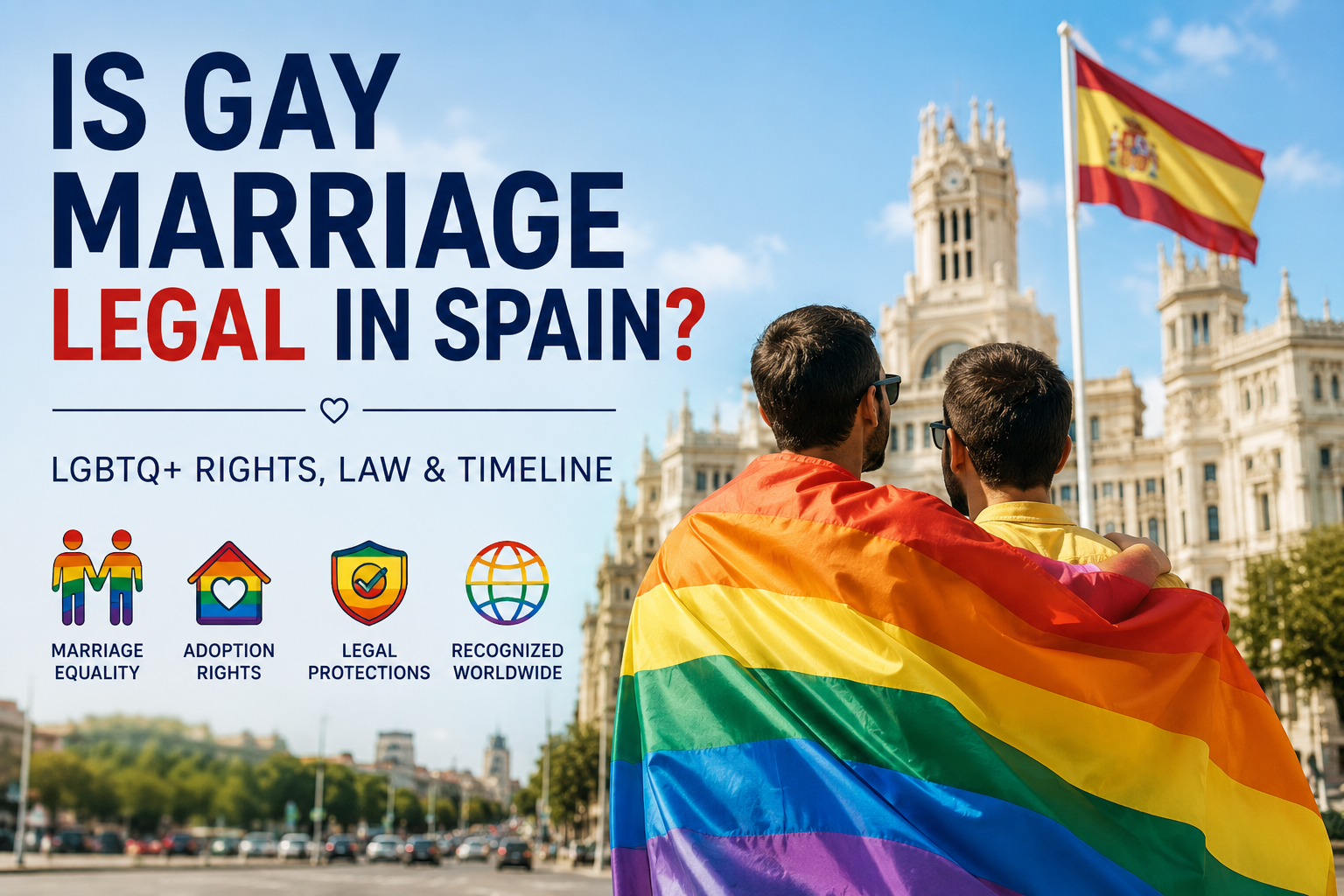
Yes — gay marriage is fully legal in Spain.
Spain officially legalized same-sex marriage on 3 July 2005, becoming the third country in the world to do so after the Netherlands and Belgium.
Under Spanish law, same-sex couples have the same legal rights and responsibilities as heterosexual married couples, including:
- Marriage rights
- Adoption rights
- Residency rights
- Inheritance rights
- Tax benefits
- Social security benefits
- Divorce rights
- Family reunification rights
Spain is widely considered one of the most LGBTQ+-friendly countries in Europe.
When Did Spain Legalize Gay Marriage?
Same-sex marriage became legal through:
Law 13/2005
The law amended the Spanish Civil Code to allow marriage:
“between persons of the same or different sex.”
The legislation was officially published in Spain’s official state bulletin:
This historic reform made Spain one of the global leaders in LGBTQ+ equality.
What Rights Do Same-Sex Couples Have in Spain?
Same-sex married couples in Spain receive the same legal protections as opposite-sex couples.
Main Rights Include
Marriage Equality
Same-sex couples can legally marry anywhere in Spain through civil marriage procedures.
Adoption Rights
Gay and lesbian couples can legally:
- Adopt children jointly
- Become legal parents
- Access equal family rights
Spain recognizes equal parenting rights under family law.
Residency & Immigration Rights
Foreign spouses in same-sex marriages can apply for:
- Family reunification
- EU family residency cards
- Residence permits
- Long-term residency pathways
This is especially important for international couples relocating to Spain.
Inheritance Rights
Same-sex spouses receive the same inheritance protections as heterosexual married couples.
Tax & Social Benefits
Married same-sex couples can access:
- Joint taxation options
- Pension rights
- Widow/widower benefits
- Healthcare rights
- Social security protections
Is Spain LGBTQ+ Friendly?
Yes — Spain is considered one of the most LGBTQ+-friendly countries globally.
Cities such as:
- Madrid
- Barcelona
- Málaga
- Sitges
- Torremolinos
have vibrant LGBTQ+ communities and annual Pride celebrations.
Madrid Pride
Madrid Pride is one of the largest Pride events in Europe and attracts millions of visitors each year.
Constitutional Basis for LGBTQ+ Equality in Spain
Spain’s legalization of same-sex marriage was based on constitutional principles of:
- Equality
- Human dignity
- Non-discrimination
- Free personal development
The reform reflects protections found within the Spanish Constitution, particularly Articles:
- Article 9.2
- Article 14
These constitutional protections prohibit discrimination and support equal treatment under the law.
Can Foreigners Get Married in Spain?
Yes — foreigners can marry in Spain under certain conditions.
Typical Requirements
Depending on nationality and residency status, couples may need:
- Passport
- Birth certificate
- Certificate of marital status
- Proof of address
- NIE number (in some cases)
Requirements can vary by municipality and nationality.
Is Foreign Same-Sex Marriage Recognized in Spain?
Generally, yes.
Spain recognizes same-sex marriages legally performed in countries where same-sex marriage is valid.
This recognition is important for:
- Residency applications
- Inheritance
- Tax purposes
- Family reunification
LGBTQ+ Protections in Spain
Spain has broad anti-discrimination protections covering:
- Employment
- Housing
- Education
- Public services
Several autonomous communities also provide additional LGBTQ+ protections and equality laws.
Is Spain Safe for LGBTQ+ Expats?
For many LGBTQ+ expats, Spain is considered:
- Safe
- Inclusive
- Open-minded
- International
- Family-friendly
Popular destinations for LGBTQ+ residents include:
- Madrid
- Barcelona
- Valencia
- Málaga
- Marbella
- Torremolinos
Torremolinos in particular has become one of Spain’s best-known LGBTQ+ coastal destinations.
FAQ About Gay Marriage in Spain
Spain consistently ranks among the leading countries in Europe for LGBTQ+ acceptance and equality protections.
Yes. Spain recognizes same-sex spouses for residency and family reunification applications.
Yes. Same-sex married couples have full joint adoption rights.
In some cases, yes. Requirements depend on nationality, legal status, and local registry rules.
Final Thoughts
Spain has been one of the global pioneers in LGBTQ+ equality since legalizing same-sex marriage in 2005.
Today, same-sex couples in Spain enjoy:
- Equal marriage rights
- Adoption rights
- Legal protections
- Immigration recognition
- Social and tax benefits
Combined with Spain’s open culture, international communities, and high quality of life, the country remains one of the most attractive destinations for LGBTQ+ residents, couples, retirees, and expats.
Read More About Spanish Legal Basics
Before moving to Spain, it is also useful to understand:
- Residency procedures
- Spanish bureaucracy
- Healthcare registration
- NIE numbers
- Property laws
- Tax obligations
You may also enjoy our Spanish legal and relocation guides to better prepare for life in Spain.
Leave a Reply